Rana Foroohar

Rana Foroohar is TIME's assistant managing editor in charge of economics and business.

Articles from Contributor

Sort by  
Curious Capitalist

Walmart’s Discounted Ethics

Walmart became the world’s largest retailer by offering “everyday low prices” around the globe. Apparently, though, Walmart was offering something else too. The company has been plunged into a major scandal since a New York Times investigation revealed that Walmart’s Mexico subsidiary paid $24 million in bribes to local officials to sidestep regulations and obtain [...]

Curious Capitalist

President to Oil Speculators: Cut It Out

Frederic J. Brown / AFP / Getty Images

President is now trying to turn the tables on those who accuse him of supporting higher gas prices by going after commodities speculators, whom he blames for distorting markets, with tougher regulation.

Curious Capitalist

Europe’s Economic Woes: That Sound You Hear Is the Euro Cracking

Ian McKinnell / Getty Images

A break-up in the Eurozone just got more real with the announcement of the short-list for the Wolfson Economics Prize. This years challenge question was: “If member states leave the Economic and Monetary Union, what is the best way for the economic process to be managed to provide the soundest foundation for the future growth and prosperity of the current membership?”

Curious Capitalist

Is the Wimpy Recovery Morphing into a Recession?

Tim Robberts / Getty Images

We’ve just begun coming to grips with the Wimpy Recovery. Are we actually in for another recession? That was the implication of a couple of economic reports I read this week, including one by ITG Investment Research, which tracked how the pace of this recovery (which was never great to begin with) has by some measures been slowing, most particularly among middle income consumers and industries producing for overseas markets.

Curious Capitalist

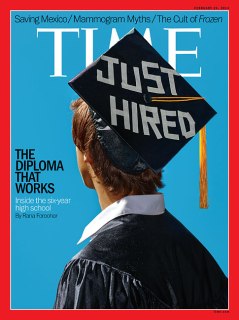
Schools That Mean Business

A startlingly low percentage of U.S. college students—30% at four-year colleges and only about 25% at two-year colleges—finish their degrees. Some of that underachievement is money-related, but some of it is due to the fact that the U.S., unlike high-growth countries like Germany, doesn’t do much to connect educators with corporations doing the hiring.

Curious Capitalist

The Fall of Bo Xilai and the Future of Chinese Growth

MARK RALSTON / AFP / Getty Images

The fall of Bo Xilai, the former head of the Chinese Communist Party in the sprawling mid-Western city of Chongqing, is the stuff of movies. But it’s even more compelling when you begin to parse what it means politically and economically for the Middle Kingdom, and the world.

Curious Capitalist

Why We Need to Tackle the Skills Gap

George Frey / Bloomberg / Getty Images

I was struck this morning by two Op-Ed pieces: first, Larry Summers prescription for how to nurture the recovery in the FT, and Steven Rattner’s parsing of some new data on American inequality which found – surprise! – the rich got even richer in 2010. A whopping 93% of the additional $288 billion in income [...]

Curious Capitalist

Why Is Unemployment Falling So Fast When Growth Is So Slow?

The U.S. unemployment rate has fallen from 9% to about 8% in the last year, to the delight of everyone from job seekers to the Obama re-election team. But traditional economic theory tells us that shouldn’t have happened unless the economy was growing by double its current 2.5% rate.

Curious Capitalist

Who Should Be the Next President of the World Bank?

Tomohiro Ohsumi / Bloomberg / Getty Images

Everyone is focused on the U.S. presidential elections this year, but there’s another presidential race that’s heating up – the race to be president of the World Bank. It’s a process that’s just as political, but much less transparent, since the choice ultimately rests with the White House, which tends to pick an American with clout, regardless of whether he (they’ve all been male) is the best person for the job.

Curious Capitalist

Why A Stronger Economy Probably Won’t Translate Into A Raise — Yet

Last Friday’s jobs numbers came in strong, particularly in important areas like manufacturing, but will salaries start to rise as unemployment falls?