Are We Already Planting the Seeds of the Next Financial Crisis?

Central banks are trying to revive weak economies by injecting large amounts of money. That policy helps in the short run, but easy money can also create the conditions for future booms and busts.
Lucas Jackson / Reuters
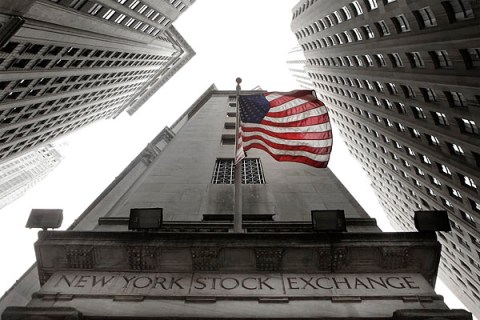
The United States flag hangs outside the New York Stock Exchange

The wreckage of the housing bubble and the banking crisis haven’t yet been cleared away completely, but already there are hints of renewed speculation – warning signs of a problem that often arises when central banks try to bolster weak economies.

Expanding the amount of money in circulation is, of course, beneficial in the short run because it stimulates business activity and takes some of the pressure off overextended borrowers and banks. But easy money also encourages risk-taking and temporarily pushes the prices of safe investments up to unsustainable levels, thereby creating the potential for future financial crises.

This problem last occurred – with catastrophic results – in the years following the 2000 technology stock crash, when Federal Reserve Chairman Alan Greenspan repeatedly stoked the money supply. That did help revive the U.S. economy, but it also fueled a bubble in home prices that contributed greatly to the 2008 banking crisis. Moreover, Fed officials seemingly failed to recognize this side effect as it was happening. Around the time the housing bubble peaked in 2006, Fed Vice Chairman Timothy Geithner (now the Secretary of the Treasury) summed up the official outlook: “This, on balance, still leaves us with what looks like a relatively balanced set of risks around what is still a quite favorable growth forecast.” In retrospect, that assessment was much too blithe. Indeed, in testimony before Congress in October 2008, Greenspan himself acknowledged that he had underestimated the risks of his policies.

Is current Fed Chairman Ben Bernanke making the same mistake – risking future bubbles because he is trying to compensate for a past one? Obviously, it’s too soon to tell. But Bernanke has already gone further than previous Fed officials in one respect, at least. Traditionally, Fed Chairmen have refused to tip their hand. Alan Greenspan once famously remarked: “Since becoming a central banker, I have learned to mumble with great incoherence. If I seem unduly clear to you, you must have misunderstood what I said.” Bernanke, by contrast, has bluntly announced that he will hold down interest rates close to zero until 2014. That may be intended as a confidence-building measure, but it will also make speculators feel more secure. Consider these signs of a growing appetite for risk:

Aggressive investments are becoming more popular. Low interest rates are making investors take greater risks in the search for yield. Sales of junk bonds picked up in January, and February looks strong as well, with billion-dollar-plus offerings by casino owner Caesars Entertainment and hospital operator HCA. Insiders at tech companies are also finally seeing a chance to cash out after four years in which a bad stock market discouraged initial public offerings. IPO activity at the start of 2012 was the greatest in seven years, and will likely pick up further if Facebook’s enormous offering goes off well. This IPO would value Facebook at as much as $100 billion, or more than three times as much as Google’s 2004 IPO, which took place just as the housing bubble really got going.

Safe investments have enjoyed big price gains recently. The Dow has climbed 20% since October on economic statistics that are only mildly encouraging. Moreover, the Congressional Budget Office projects that the economy will slow later this year. In my view, the explanation for share-price gains that are stronger than the economic outlook justifies is that hot money fleeing Europe is looking for safe havens – one of which is the U.S. stock market.

Today’s biggest bubble in safe assets, however, is the one in Treasury bonds, which is a direct consequence of the Fed’s policy of holding interest rates down at abnormally low levels. Bond prices move in the opposite direction of interest rates, so when the Fed holds rates down, it is propping prices up. And when the Fed eventually does allow rates to rise to more normal levels – even if that really isn’t until 2014 – bond prices will fall significantly.

European banking policies are also encouraging risk-taking. Similar to the Fed’s attempts to reflate the U.S. economy, the European Central Bank has made hundreds of billions of euros available to European banks on extraordinarily generous terms. The institutions are not only using the money to meet their own short-term financing needs, they are also borrowing additional money to purchase the bonds of troubled countries and earn the spread between the yields on those bonds and the much lower rate the ECB is charging them for money. This strategy is known as the carry trade, which I discussed in a recent column. By trying to make a little extra money, European banks are increasing their exposure to Eurozone problems. If the Eurozone crisis gets worse, the entire global banking system will feel the effects, including institutions in the U.S.

None of these bellwethers – either individually or taken together – means that there will be another financial crisis in the next few months – or even the next few years. Perhaps everyone will back off a bit and calm down after the November elections. But current trends are consistent with the warning economists always give about moral hazard – the idea that no-fault bailouts and easy money encourage future reckless behavior. At the very least, the proper response for investors is greater prudence and caution.

Related Topics: Economy, Economy & Policy, Europe, Facebook, Google, Technology & Media, Venture Capital, Wall Street & Markets
  • Latest on Business

    Book Review: What America's Banana King Teaches Us About Capitalism

    Book Review: What America’s Banana King Teaches Us About Capitalism

    Americans puzzling over the role of today’s powerful corporations — Bain Capital, Goldman Sachs, Google — may profit from considering the example of the United Fruit Company.

    It seems almost quaint to think that a company specializing in bananas might have once been considered a capitalist giant on the level of today’s firms, but so it was — at its height in the first half of the last century, United Fruit owned one of the largest private navies in the world. It owned 50 percent of the private land in Honduras and 70 percent of all private land and every mile of railroad in Guatemala.

    The Bomb Hidden in Mitt Romney's Education PlanSlate

    Ed Freeman / Getty Images

    Why Companies Can No Longer Afford to Ignore Their Social Responsibilities

    In 1970, the economist and Nobel laureate Milton Friedman published an article in The New York Times Magazine titled, “The Social Responsibility of Business Is to Increase Its Profits.” In the article, he referred to corporate social responsibility (CSR) programs as “hypocritical window-dressing,” and said that businesspeople inclined toward such programs “reveal a suicidal impulse.” Even four decades ago, at a time of growing public concern for the environment, his views represented the general skepticism and contempt with which many in Corporate America viewed CSR.

  • http://business.time.com/2012/02/14/paul-volcker-defends-eponymous-rule/ Paul Volcker Defends Eponymous Rule | Business | TIME.com

    [...] (MORE: Are We Already Planting the Seeds of the Next Financial Crisis?) [...]

  • http://www.actandle.com/2012/02/14/paul-volcker-defends-eponymous-rule/ Paul Volcker Defends Eponymous Rule « Breaking News | Latest News | Current News

    [...] (MORE: Are We Already Planting the Seeds of the Next Financial Crisis?) [...]

  • http://www.nilenewsnt.com/?p=80604 Paul Volcker Defends Eponymous Rule – شبكة النيل الإخبارية

    [...] (MORE: Are We Already Planting a Seeds of a Next Financial Crisis?) [...]

  • http://www.1913intel.com/2012/02/14/are-we-already-planting-the-seeds-of-the-next-financial-crisis-business-time-com/ Are We Already Planting the Seeds of the Next Financial Crisis? | Business | TIME.com | 1913 Intel

    [...] Are We Already Planting the Seeds of the Next Financial Crisis? | Business | TIME.com Financial CrisisAlan Greenspan, Amount Of Money, Banking Crisis, Business Activity, Business Time, Catastrophic Results, Central Banks, Chairman Alan Greenspan, Easy Money, Expanding The Amount, Federal Reserve Chairman, Federal Reserve Chairman Alan Greenspan, Financial Crises, Housing Bubble, Money Supply, Rsquo, Stock Crash, Technology Stock, Warning Signs, Wreckage ← West may strike Iran by summer – Russian Gen-Staff Chief — RT Comments are closed. /* */ RSS Feed [...]

  • http://www.ritholtz.com/blog/2012/02/10-mid-week-am-reads-5/ 10 Mid-Week AM Reads | The Big Picture

    [...] My morning reads: • Sentiment warning: Wall St Week Ahead: Bulls will not be tamed by weak earnings (Reuters) • Are We Already Planting the Seeds of the Next Financial Crisis? (Time) [...]

  • http://alperfx.com/2012/02/15/10-mid-week-am-reads/ 10 Mid-Week AM Reads « Alper

    [...] by weak earnings (Reuters) • Are We Already Planting the Seeds of the Next Financial Crisis? (Time) • A fate worse than a hard landing for China (FT.com) see also China’s central-bank chief [...]

  • http://mawillits.wordpress.com/2012/02/16/are-we-already-planting-the-seeds-of-the-next-financial-crisis-business-time-com/ Are We Already Planting the Seeds of the Next Financial Crisis? | Business | TIME.com « mawillits

    [...] Are We Already Planting the Seeds of the Next Financial Crisis? | Business | TIME.com. Share this:EmailFacebookTwitterLike this:LikeBe the first to like this post. Comments [...]

  • Noran danish

    A study is required to how to modify human behaviour is required to turn the life beautiful

  • http://www.idf50.co.uk/clubhouse/current-affairs-religion-politics/37186-we-already-planting-seeds-next-financial-crisis.html#post427423 Are We Already Planting the Seeds of the Next Financial Crisis? – I don’t feel 50 Forums

    [...] Are We Already Planting the Seeds of the Next Financial Crisis? Expanding the amount of money in circulation is, of course, beneficial in the short run because it stimulates business activity and takes some of the pressure off overextended borrowers and banks. But easy money also encourages risk-taking and temporarily pushes the prices of safe investments up to unsustainable levels, thereby creating the potential for future financial crises. Time Magazine [...]

  • http://www.thecaffeinatedslacker.com/?p=6 Are We Planting the Seeds of the Next Financial Crisis? | Caffeinated Slacker

    [...] We Planting the Seeds of the Next Financial Crisis? http://business.time.com/2012/02/13/are-we-already-planting-the-seeds-of-the-next-financial-crisis/ This entry was posted in news, time and tagged Financial Crisis by admin. Bookmark the [...]

  • http://business.time.com/2012/02/27/is-this-stock-market-rally-for-real/ Is This Stock Market Rally for Real? | Business | TIME.com

    [...] (MORE: Are We Already Planting the Seeds of the Next Financial Crisis?) [...]

  • http://business.time.com/2012/02/28/consumer-confidence-up-in-february/ Consumer Confidence Up in February | Business | TIME.com

    [...] (MORE: Are We Already Planting the Seeds of the Next Financial Crisis?) [...]

  • http://digitalbullpen.com/2012/02/28/all-the-news-thats-fit-for-bulls-feb-28-edition/ All the news that’s fit for Bulls – Feb. 28 edition. « The Digital Bullpen

    [...] The new financial crisis? [...]

blog comments powered by Disqus