


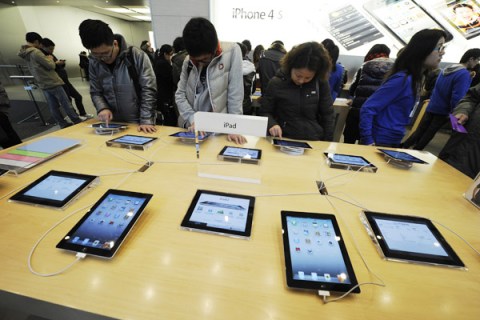
Customers look at Apple iPads at a store in Shanghai on February 22, 2012. A trademark dispute between Apple and a Chinese computer maker moved to Shanghai where the debt-laden plaintiff is seeking to stop the sale of the US giant's iconic iPad.
Apple’s escalating trademark dispute with a Chinese company over the rights to the term “iPad” reached a courtroom on Wednesday — and the result was a contentious four-hour hearing that was long on theatrics but short on progress toward a solution, according to several reports out of Shanghai. The increasingly acrimonious battle adds to Apple’s headaches in China, and could disrupt iPad sales in China’s huge and fast-growing market — and possibly even worldwide.
Lawyers for Apple and a Chinese company called Proview International squared off over whether Apple has the right to use the iPad name to sell its wildly popular tablet device in China. In recent weeks, Proview, which says it’s the legal owner of the iPad name in China, has ramped up its case, and Chinese authorities have responded, yanking iPads off the shelves in several cities. Proview has even asked customs authorities to ban the export of iPads out China, where they are manufactured, a move that could theoretically cripple Apple’s global sales of the device.
“Apple has no right to sell iPads under that name,” Proview’s lawyer Xie Xianghui told the court, during what the Associated Press described as a “fractious” four-hour court hearing in which the judge repeatedly admonished the two parties “to observe proper court protocol.”
(More: Apple Threatened with iPad Shipment Ban in China Trademark Fight)
During the hearing, Proview lawyers presented what they described as the company’s own IPAD computer, or “Internet Personal Access Device,” and argued that Apple’s iPad had harmed its product’s chances for success, the AP said. For its part, Apple pointed out that Proview launched the IPAD in 2000, fully a decade before Steve Jobs introduced the iPad in 2010, to great acclaim. Apple also took a dig at Proview, which is struggling and deeply in debt, saying the company has “no market, no sales, no customers. They have nothing.”
Apple says it bought the rights to the iPad trademark from Proview in 2009 for $55,000. Proview says the deal only included the rights to the name in Taiwan, not China. Apple issued a statement Wednesday addressing the matter, which was cited by The New York Times: “We bought Proview’s worldwide rights to the iPad trademark in 10 different countries several years ago. Proview refuses to honor their agreement with Apple in China and a Hong Kong court has sided with Apple in this matter. Our case is still pending in mainland China.”
Proview asserted that the Hong Kong ruling, which found that Proview had acted with the intention of “injuring Apple,” is inadmissible in a Chinese court. No date was set for further hearings on the case, although Apple has appealed an earlier ruling in favor of Proview in China’s Guangdong province, which is scheduled to be heard on Feb. 29.