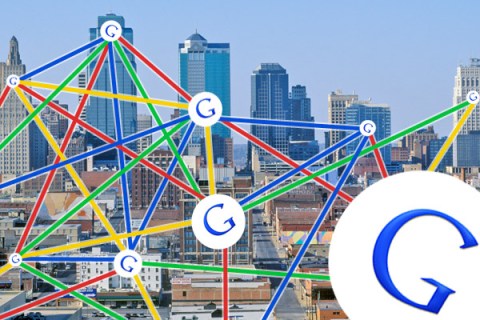
Will Google’s Insanely-Fast Kansas City Network Shame U.S. ISPs?

TIME Illustration; Getty Images

Google’s highly-anticipated plan to build an ultra-fast city broadband network kicked into gear Monday with the search giant’s announcement that it will begin laying miles of fiber-optic cable across Kansas City, Kansas and neighboring Kansas City, Missouri. Google said it aims to create a new “high speed infrastructure” that will allow local citizens to enjoy data speeds 100 times the national average. Google’s goal? To show off its telecom engineering chops and showcase next-generation web-applications. Oh, and maybe shame the big national broadband providers into improving U.S. Internet service speed, which currently lags behind many other countries around the world.

Google’s Kansas City network is not just a stunt: the company is implicitly making a broader point about the lack of broadband competition in the U.S., which is one of the reasons broadband is slower and more expensive here. If Google is successful, it could embarrass  — or at least call out — existing ISPs once it becomes clear that much faster broadband speeds are possible in major U.S. cities. For comparison, Verizon’s ultra high-end FiOS plan tops out at 150 megabits-per-second. Google’s Kansas City network will boast blazing speeds of 1 gigabit-per-second, or nearly seven-times that of Verizon. (HD streaming-video to the living-room, anyone?)

Google first announced the project in February of 2010, saying it wanted “to make a meaningful contribution to the shared goal of delivering faster and better Internet for everyone.” Over 1,000 cities expressed interest, and last year, Google selected Kansas City as the first city for the test program (and later expanded to neighboring Kansas City, Missouri). Google spent several months hammering out the details with local officials, including where the company could hang its fiber cables on city utility poles. Now, all systems are go, Google’s Kevin Lo wrote in a company blog post. Google isn’t saying how much the network will cost, only that it will offer the super-fast broadband service at “competitive” prices for consumers. But let’s face it: Google isn’t going to match its sky-high search ad profits with this venture, and may actually lose money in the short-term. So what’s Google’s game here?

(More: Google Taps Kansas City for Crazy-Speed Internet)

Google wants more people online with faster connections, in order to better provide and expand its web-based services around the country. That’s why Google has traditionally advocated for open, high-speed networks and complained about U.S. broadband speeds. “By several measures, no matter who you ask, the U.S. in far too many places still lags behind many countries in Europe and Asia in terms of broadband speed, availability, and uptake,” Richard Whitt, Google’s top D.C. telecom lawyer, wrote when the company’s initiative was first announced.

Google is not alone in its concern. Last year, a study found that U.S. broadband speeds ranked 26th in the world, far behind South Korea, Romania and Bulgaria. Nearly one-third of U.S. residents, meanwhile, or 100 million Americans, don’t have high-speed Internet access at home, compared to Singapore and Korea where the adoption rates are over 90 percent, according to the Federal Communications Commission. What’s more, studies have shown that U.S. broadband service costs more than in other countries. Of course, it’s much easier to wire South Korea, with its relatively new infrastructure, than the U.S., which has a vast and often rugged geography. But that’s not the only reason U.S. service is slower and more expensive.

Lack of competition is also a problem. In many markets, there are only two options for broadband service, and without more competition, the companies that offer it have little incentive to improve service or lower prices. “Without a major policy shift to increase competition, broadband service in the United States will continue to lag far behind the rest of the developed world,” Yochai Benkler, co-director of the Berkman Center for Internet and Society, has written. FCC Chairman Julius Genachowski has embarked on a high-profile plan to improve the state of U.S. broadband, in part by using the $8 billion Universal Service Fund to help expand broadband access in rural, under-served areas. But real improvement will only come with more competition.

Enter Google. This isn’t the first time the search giant has used its clout to try to nudge the incumbent broadband providers. Google owns vast swaths of so-called “dark fiber” — unused cable that it picked up for cheap after the dot-com bust, and in 2008 the company bid $4.6 billion for a highly-valuable chunk of wireless spectrum known as the 700Mhz C Block. Verizon Wireless ultimately snagged the spectrum for $4.7 billion, but Google’s bid triggered FCC “open access” provisions that the search giant favored. Many analysts view Google’s ultra-high-speed broadband initiative in a similarly strategic light. In the end, it’s highly unlikely that Google will begin offering fiber-to-the-home broadband on a nation-wide basis. But Google will have made its point.

Related Topics: broadband, fiber-optic, fiber-to-the-home, Google, ISP, Kansas City, Verizon, Verizon FiOS, Technology & Media
  • Latest on Business

    Book Review: What America's Banana King Teaches Us About Capitalism

    Book Review: What America’s Banana King Teaches Us About Capitalism

    Americans puzzling over the role of today’s powerful corporations — Bain Capital, Goldman Sachs, Google — may profit from considering the example of the United Fruit Company.

    It seems almost quaint to think that a company specializing in bananas might have once been considered a capitalist giant on the level of today’s firms, but so it was — at its height in the first half of the last century, United Fruit owned one of the largest private navies in the world. It owned 50 percent of the private land in Honduras and 70 percent of all private land and every mile of railroad in Guatemala.

    The Bomb Hidden in Mitt Romney's Education PlanSlate

    Ed Freeman / Getty Images

    Why Companies Can No Longer Afford to Ignore Their Social Responsibilities

    In 1970, the economist and Nobel laureate Milton Friedman published an article in The New York Times Magazine titled, “The Social Responsibility of Business Is to Increase Its Profits.” In the article, he referred to corporate social responsibility (CSR) programs as “hypocritical window-dressing,” and said that businesspeople inclined toward such programs “reveal a suicidal impulse.” Even four decades ago, at a time of growing public concern for the environment, his views represented the general skepticism and contempt with which many in Corporate America viewed CSR.

  • http://business.time.com/2012/02/07/facebook-governance-already-a-concern-for-giant-ca-pension-fund/ Facebook Corporate Governance Already a Concern For Giant California Pension Fund CalSTRS | Business | TIME.com

    [...] (Also: Will Google’s Insanely-Fast Kansas City Network Shame U.S. ISPs?) [...]

  • http://blog.adniberia.com/2012/02/07/google-conecta-kansas/ Google ‘conecta’ Kansas | ADN Marketing – Blog de marketing de Ayuda al Desarrollo de Negocio

    [...] Vía Time [...]

  • http://bizmology.hoovers.com/2012/02/07/google-begins-building-high-speed-infrastructure-in-kansas-city/ Google begins building high-speed infrastructure in Kansas City

    [...] speeds available are from Verizon‘s FiOS system than can reach 150-megabits-per-second. Time reports that Google’s Kansas City infrastructure will be seven times faster at 1 [...]

  • http://www.socialmediaenclose.com/social-media/google-social-media/will-googles-insanely-fast-kansas-city-network-shame-u-s-isps.html Will Google’s Insanely-Fast Kansas City Network Shame U.S. ISPs? | social media

    [...] more: http://business.time.com/2012/02/07/why-googles-insanely-fast-kansas-city-network-could-shame-u-s-… Follow social media on Twitter, become a fan on Facebook. Stay updated via [...]

  • http://spunkl.com/google-starts-laying-high-speed-fiber-in-kansas-city-zdnet-blog/ Google starts laying high-speed fiber in Kansas City – ZDNet (blog) | SPUNKL

    [...] TIME [...]

  • http://www.allcabletypes.info/about/cables/google-ready-to-lay-fiber-in-kansas-city-metro Google ready to lay fiber in Kansas City metro – CABLE TYPES – CABLE TYPES

    [...] Fiber designation stirred existent ISPs to offer business greater-bandwidth Internet connections. A column in a online chronicle of Time repository goes so distant as to advise that once a open understands [...]

  • http://www.fiberopticsensors.co.uk/google-ready-to-lay-fiber-in-kansas-city-metro Google ready to lay fiber in Kansas City metro | Fiberoptic Sensors

    [...] installation prompted existing ISPs to offer customers greater-bandwidth Internet connections. A column in the online version of Time magazine goes so far as to suggest that once the public understands [...]

  • http://gogooglekc.com/?p=30 Limited Bandwidth from ISP’s | gogooglekc.com

    [...] http://business.time.com/2012/02/07/why-googles-insanely-fast-kansas-city-network-could-shame-u-s-is… This entry was posted in Google Gig Deployment News by admin. Bookmark the permalink. [...]

  • http://googlechili.searchengine.hoops227.org/2012/02/09/google-ready-to-lay-fiber-in-kansas-city-metro/ Google ready to lay fiber in Kansas City metro at googlechili.searchengine.hoops227.org

    [...] installation prompted existing ISPs to offer customers greater-bandwidth Internet connections. A column in the online version of Time magazine goes so far as to suggest that once the public understands [...]

  • http://www.googlequerque.org/google-ultra-high-speed-internet-access/latest-google-ultra-high-speed-internet-access-news.html Latest Google Ultra High Speed Internet Access News

    [...] Will Google's Insanely-Fast Kansas City Network Shame US ISPs? Google's goal? To show off its telecom engineering chops and showcase next-generation web-applications. Oh, and maybe shame the big national broadband providers into improving US Internet service speed, which currently lags behind many other countries … Read more on TIME [...]

  • http://business.time.com/2012/02/15/lightsquareds-broadband-rejection-a-blow-for-wireless-competition/ LightSquared’s Broadband Rejection a Blow for Wireless Competition | Business | TIME.com

    [...] (More: Will Google’s Insanely-Fast Kansas City Network Shame U.S. ISPs?) [...]

  • http://www.dslbuddy.net/lightsquareds-broadband-rejection-a-blow-for-wireless-competition/ LightSquared’s Broadband Rejection a Blow for Wireless Competition | DSL Buddy

    [...] (More: Will Google’s Insanely-Fast Kansas City Network Shame U.S. ISPs?) [...]

  • http://www.dslbuddy.net/lightsquared-rejection-a-blow-for-wireless-broadband/ Lightsquared Rejection a Blow for Wireless Broadband | DSL Buddy

    [...] (More: Will Google’s Insanely-Fast Kansas City Network Shame U.S. ISPs?) [...]

  • http://business.time.com/2012/02/23/is-google-building-a-giant-virtual-dvr-player/ Google Aims to Add TV to Kansas City Fiber Network | Business | TIME.com

    [...] this month, Google began laying fiber for what it called a “high speed infrastructure” for the Kansas City area that will allow local [...]

  • http://hirendhara.in/toni/google-takes-another-experimental-step-toward-delivering-tv/ Google Takes Another Experimental Step Toward Delivering TV | My Blog

    [...] this month, Google began laying fiber for what it called a “high speed infrastructure” for a Kansas City area that will concede [...]

  • http://www.fiberopticsensors.co.uk/google-takes-another-experimental-step-toward-delivering-tv Google Takes Another Experimental Step Toward Delivering TV | Fiberoptic Sensors

    [...] this month, Google began laying fiber for what it called a “high speed infrastructure” for the Kansas City area that will allow local [...]

  • http://2underscoredguys.com/?p=155 American Internet Bandwidth | 2_Guys

    [...] Google, just to smack the current ISP’s, decided that they are going to lay down their own cables/fiber to prove that with the right infrastructure, that the US get better service with more competition. [...]

blog comments powered by Disqus