


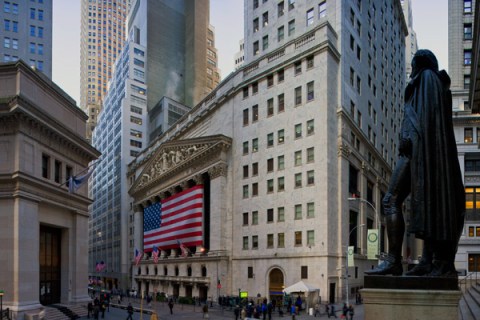
How bad has the mood gotten on Wall Street? Judging by an article in the new issue of New York magazine, the answer is bleak indeed. Even as the broader economy shows signs of improving, Wall Street is coming off a year in which earnings — and the all-important bonuses dependent on them — were down sharply. Some 200,000 financial-sector workers lost their jobs. Public outrage against the big banks remains high and the Dodd-Frank financial reform bill has already curtailed some of Wall Street’s more aggressive practices — and it hasn’t even been fully implemented yet. In short, bankers and traders now face a significantly-altered landscape, and they’re not happy about it
Gone are the days, it would seem, that the best-and-brightest young graduates flocked to Wall Street in search of riches. Now, there’s a new promised land on the West Coast. As Wall Street sees its paychecks shrink, a new crop of millionaires is about to be minted, thanks to Facebook’s impending IPO. “If you’re a smart Ph.D. from MIT, you’d never go to Wall Street now,” one a hedge-fund executive tells New York‘s Gabriel Sherman. “You’d go to Silicon Valley. There’s at least a prospect for a huge gain. You’d have the potential to be the next Mark Zuckerberg. It looks like he has a lot more fun.”
New regulations have forced the banks to drastically scale back their proprietary trading desks, where trading in exotic derivates fueled much of the outsized profits Wall Street enjoyed before the bust. Now, Wall Street is facing a return to a more mundane existence, one in which its primary activities are things like making loans, advising mergers, and guiding IPOs. Boring!
(More: Dow, Nasdaq Surge to Post-Crisis Highs on Strong Jobs, Economic Data)
The new reality prompted JPMorgan CEO Jamie Dimon to make a comparison that would have been unthinkable just a few years ago. “We’re a store, you can buy bonds, FX, advice—we provide great products at a great price,” he told the magazine. “That store is not going to go away. If you’re a big, smart investor and we can give you the best price and the best service, you’ll still be coming here, just like Wal-Mart and Costco.” Wall Street as Wal-Mart and Costco: imagine that.
On the other hand, the denizens of the financial world have never been shrinking violets. Even as their playground shrinks, you can bet that they are mustering forces to beat back some of the most restrictive reforms. There’s already a movement afoot to torpedo the Volcker Rule, which doesn’t go into effect until July 2012. That measure would limit the ability of the banks to invest in hedge funds or a private equity funds, or engage in proprietary trading unrelated to serving their customers.
Wall Street continues to pour money into the political system, evidence that the big banks aren’t going to take the new tightened regulations lying down. (Mitt Romney has been a particularly large beneficiary of the Wall Street’s largesse.) There’s no doubt that the landscape on Wall Street has shifted markedly since the high-flying boom days that preceded the financial crisis. But it may be too early to write the industry’s obituary. Wall Street may be down, but by no means is it out.