


In 2000, Brita GMBH, a German company that designs and manufactures consumer and professional water-filtration products, including popular water-purifying pitchers, made a decision that from a branding perspective seemed unthinkable. When it ended its 12-year-old licensing-and-distribution agreement with U.S. conglomerate the Clorox Co., Brita sold Clorox sole rights in North America to the Brita brand, which has become synonymous with these pitchers. The German company also agreed to a noncompete clause until 2005.
Today Brita is a fairly large company in Europe — last year’s revenue topped $400 million — with the problems of a small business in the U.S. Its new Mavea brand is the underdog in water-filtration pitchers, compared with the Clorox-owned Brita brand it created.
That may seem weird, but then again, Brita picked a good time to relaunch in the U.S. with Mavea. Recession-inspired thrift and an environmental backlash against bottled water have had a salutary impact on devices that filter tap water. Market researcher SymphonyIRI Group reports that U.S. revenue for 2009 was $183 million for these products sold via mass-market retailers, excluding Walmart. The revenue represents 8.7% growth over the preceding year and 24% growth since 2005.
Brita’s goal for Mavea, created in 2008 to serve the North American market, was to avoid looking like every other pitcher on the shelf. “We wanted to build a real premium segment,” says Brita CEO Markus Hankammer. This narrowcasting approach has its fans. “The premium niche has bite,” says Michelle Barry, president of Tinderbox, the trends division of Hartman Group. “When household products like water-filter pitchers become less trendy and more of a commodity,” she says, “the appearance of the container becomes as important as what’s in it.”
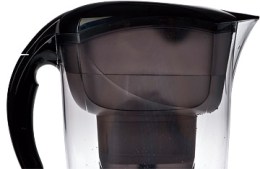
Design figures big in Mavea’s launch pitcher, the Elemaris, which is Brita’s response to consumer demand for more convenient features and a more table-ready look. The pitcher has a rubber base, a soft-grip handle and a novel opening in the lid that allows for one-handed refills under a faucet. A newly configured oval-shaped filter, the Maxtra, contains a micromesh fabric that prevents carbon fragments from escaping.
Mavea’s first retail targets were home-furnishings and specialty-food stores such as Sur la Table and a limited number of Whole Foods outlets. While the parent company markets the Elemaris globally in a variety of colors and sizes, the Mavea Elemaris comes in two sizes and two chic-cred colors, black and white, and is priced at $32 to $40. This year, says Hankammer — whose father, Heinz, founded the company in 1966 in Taunusstein, Germany — Mavea will concentrate on building broader distribution.
Hankammer concedes that Brita partnered with Clorox in 1988 because it didn’t have enough clout on its own to penetrate the North American consumer market. That was then. Now he is using Mavea to establish a consumer brand that will create a platform to supply water-filtration technology to household-appliance manufacturers and to the hospitality industry’s professional-products market.
So what is Clorox’s take on the market presence of its former partner turned competitor? With $5 billion in sales, Clorox has been conducting its own water-filtration-related research since the early 1990s, and today 7 out of 10 water-filtration pitchers sold in North America are Brita-branded, says Nick Vlahos, vice president for Clorox’s Brita division. “The more attention brought to the category, the better,” he says. In case you’re wondering, Vlahos and Hankammer are still friends who speak several times a year.
There may be one area of contention between them, however. Although Clorox has introduced the more upscale Bella, priced at about $23, Vlahos says consumers continue to look for affordability. “From an aesthetic standpoint, there’s only so many things you can do with a pitcher.”
Hankammer disagrees. “In premium water-filtration pitchers, you need both good design and technology,” he says. “The Elemaris is already a generation ahead in both.” Ladies and gentlemen, start your faucets.